
AI Lessons for 2025 from around the world
Afghanistan, Moldova, Namibia, Germany, Denmark, Tanzania, Serbia, South Africa and The Pacific Rim

The media has always been at the centre of the AI explosion and while last year it looked like it was taking serious hits, in 2025 it showed that there was a willingness to embrace AI and double down on quality journalism that holds the powerful to account. Here are the lessons learnt from the work Develop AI has done this year around the world.
Moldova & what AI is doing to podcasting
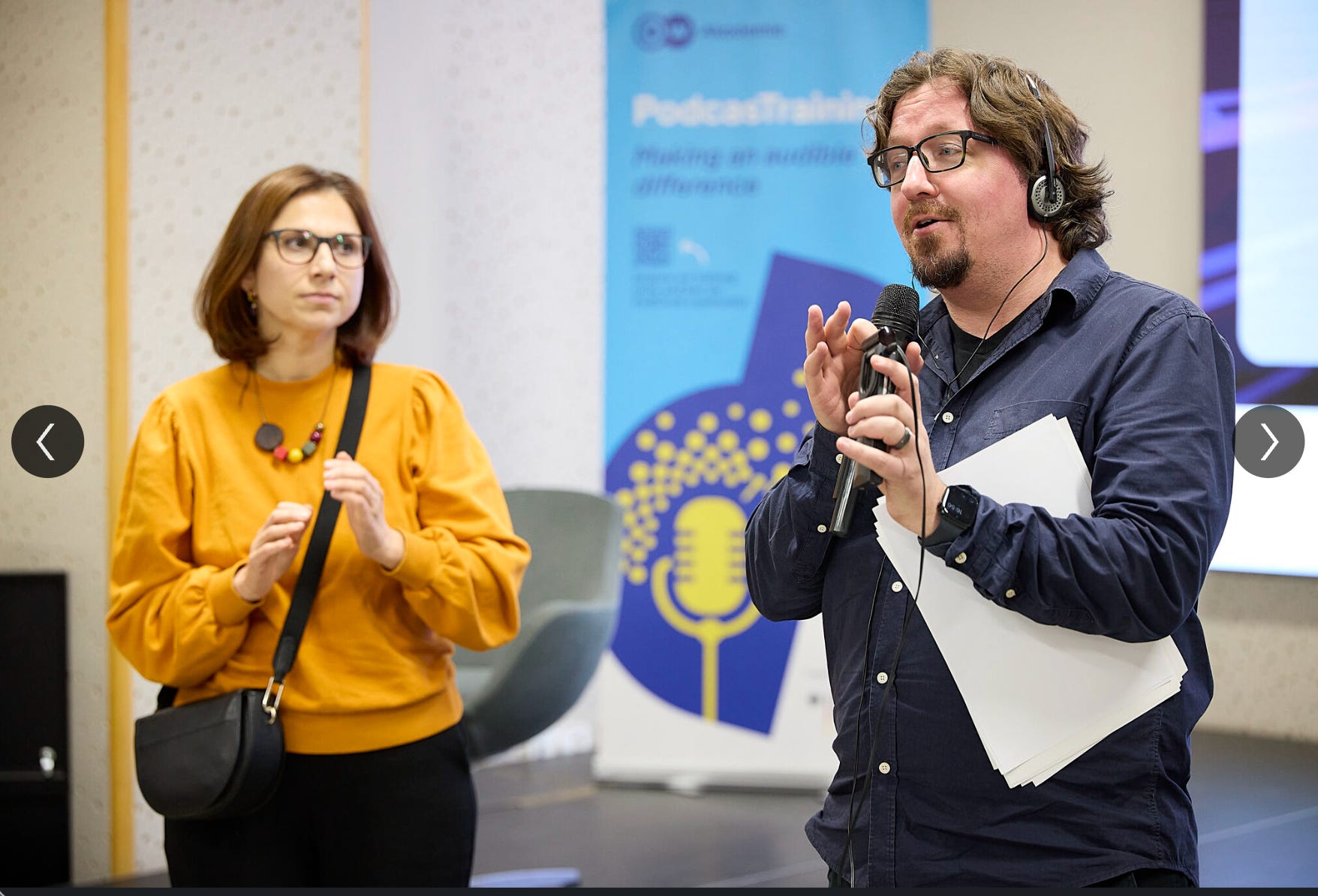
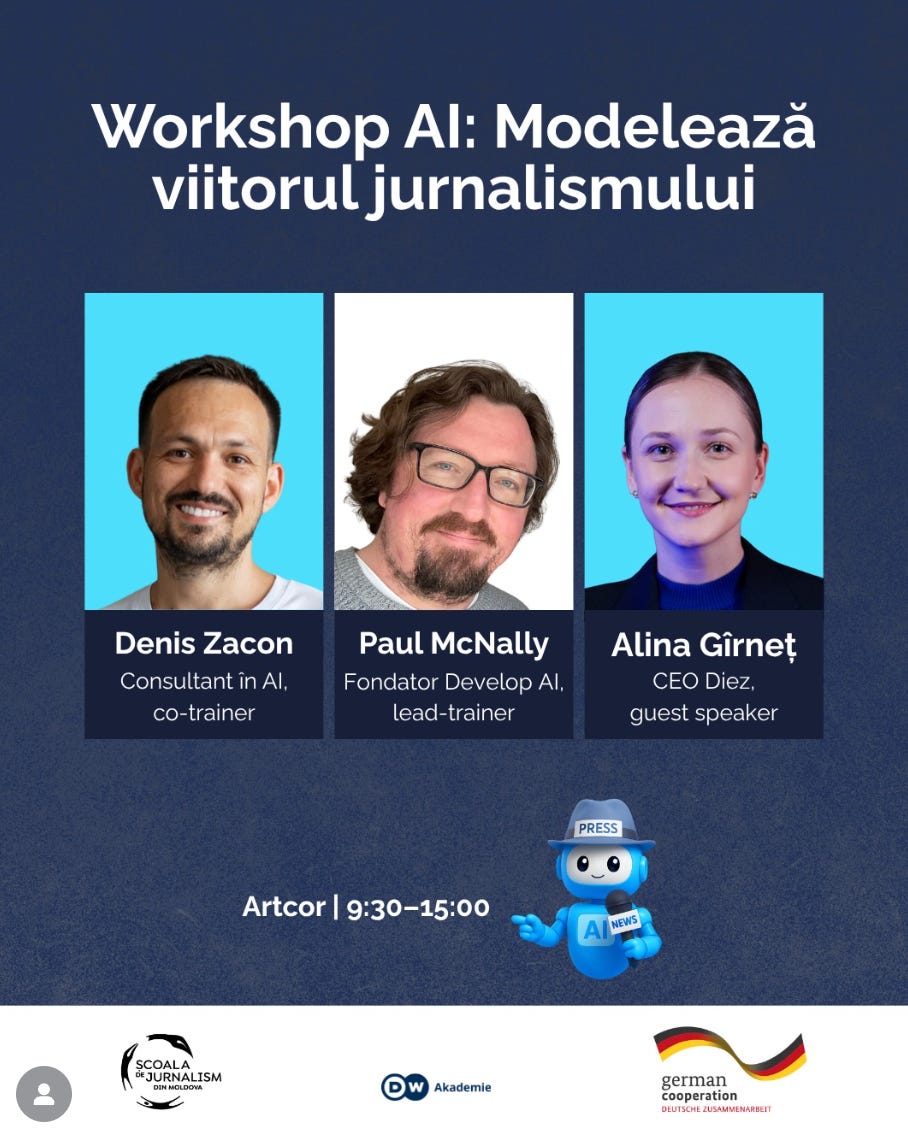
I was in Moldova earlier this year speaking on AI and podcasting at their annual Podcast Fest and giving a workshop to a range of newsrooms from around the country on AI implementation. Thank you to DW Akademie for making this happen. Podcasting is largely video focused in the region and AI avatars, created with platforms like HeyGen, are becoming increasingly common.
AI lesson: You can use Cursor and ElevenLabs to build your own AI daily podcast on all the newsletters and news you find interesting (in a language of your choice) and listen to that while making your morning coffee. Contact me for more details on how to build this.
In addition I also developed and conducted a cycle of AI and podcasting classes online with Nadine Wojcik for DW Akademie. We are repeating the cycle TWICE in the new year so look out for where you can sign up.
Tanzania & dealing with how AI is killing the web
As part of an African retreat for International Media Support (IMS) (where I am their AI Advisor) I went to Arusha, Tanzania and presented to their African team on the changing revenue streams in media. This is being caused by the end of Google search. Newsrooms and organisations have to reckon with their traffic cratering because people are reading AI summaries now instead of visiting websites. It feels strange that we let the Internet invade our lives, we loved it, it turned horrid and now it is leaving us.
AI lesson: Accept that traffic to your website is no longer the goal and redesign your work around relationships instead. What do you have that others don’t? Expertise, data and understanding of the context. And deliver this information through owned channels (email, messaging and memberships) rather than relying on platforms to send audiences to you. Don’t rely on the LLMs to send you clicks.

South Africa & The M20
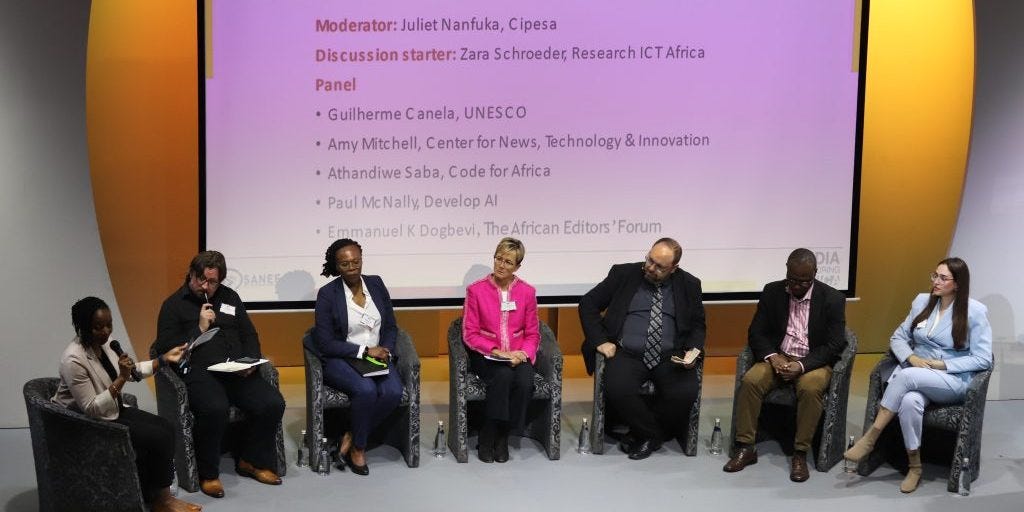
I spoke on a panel as part of the M20 Summit in Johannesburg on AI and came out guns blazing against big tech and the need for newsrooms to take control of their own data. The intention of the M20 initiative is to elevate issues related to media integrity, journalism and healthy information ecosystems within the official G20 policy agenda.
You can read the expertly written policy brief that we spoke about here. And this is the G20’s response to the M20’s incredible work.
I also mentored a host of South African newsrooms in AI implementation and policy creation for The Thomson Reuters Foundation. Watch a video about that project here.
And I wrote an extensive report on AI in South African newsrooms for The State of The Newsroom (the annual publication by The Wits Centre for Journalism). Watch the launch here.
4. Germany & the need to report on AI companies more critically
In July I was asked to participate in a Day Zero Event titled “Reclaiming our Languages: Ideation Workshop” hosted by DW Freedom, DW Akademie’s Media Development Think Tank.
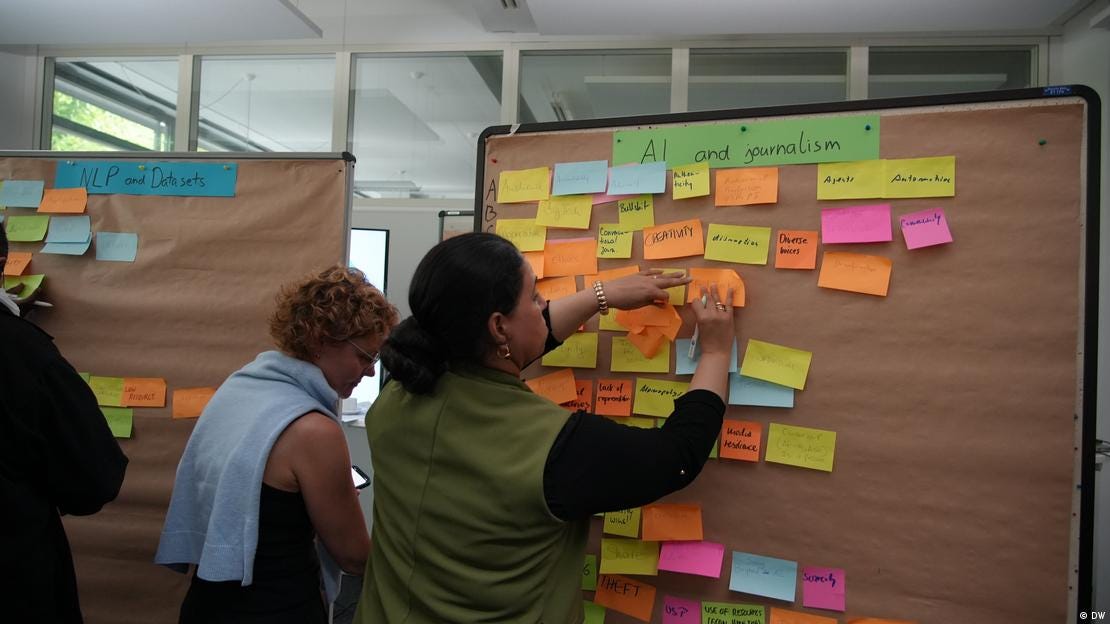
One of the insights that emerged from the fantastic workshop which brought AI experts from around the globe together in Bonn was that journalism needs to be infinitely more critical of tech companies and their AI products, despite their proclivity to use them increasingly in their work. The analogy I tell people is you can drive a car in your city and still criticise the state of the roads. I guide newsrooms not just to use AI, but also to report on it critically in their reporting work.
Serbia & data security
I visited Serbia and North Macedonia last year to help newsrooms assess their AI strategies. This year I conducted a three day extensive online training for Radio Television of Serbia on how they can best take their operation to the next level.
AI lesson: When choosing if an AI tool is safe you need to do deep research. That means reading the small print. In my classes I ask participants to choose two AI tools and explore their data security (where it is stored, if you can request the logs to be deleted and if it is sold to third parties). The results can be astounding. You’ll be surprised how much you are giving up (even when you are paying for the tool) and who they are selling your data on to.
Namibia & using AI for archiving
While visiting Windhoek last month to help The Namibian Broadcasting Corporation (NBC) implement AI to their workflows I uncovered a number of pain points around how they process data and archive their broadcast material. The next stage of work with them will be to automate how they insert their metadata into everything they store. This is hardly sexy work, but it can transform how a broadcaster operates and open up extensive revenue streams for them around licensing content. If you want help with this as an organisation, get in touch.
AI lesson: The biggest gains from AI doesn’t always come from flashy tools, but from fixing invisible infrastructure. This means clean data, consistent metadata and usable archives. When this foundation is automated, AI turns legacy content into a living asset that improves operations and unlocks new revenue.

Newsrooms in exile & AI for fundraising
I have been working with media in exile across Central and Eastern Europe throughout this year. These outlets are facing incredible struggles with personal safety and are entirely donor funded and I have been formulating ways for AI to assist with this type of revenue stream.
AI lesson: Writing a funding proposal is about correct structure and adopting the appropriate language for the donor. These are two advantages that AI can give you in spades. If you want more tips on how to build this workflow with AI, get in touch.
Afghanistan & audience modelling
Most recently, as the AI Advisor for International Media Support (IMS) I trained a team of journalists from SAMO (Salam Afghanistan Media Organization) who are looking to implement AI more thoroughly into their newsroom. There are a host of restrictions for women and particularly their interactions with men. I workshopped with them a way to use AI to clone representatives of their audience that are hard to reach (because their voices are marginalised). And then use these AI models to solve the problems that the audience members are facing in real life.
AI lesson: You can build an AI model of your ideal customer or audience member with a custom GPT. Load it with everything you know about your audience members, give it a name and then talk to it as if they were in a focus group. You than have a constant stream of input from an AI member of the public to refer to as you make your business or editorial decisions.
Denmark & the need for better information integrity
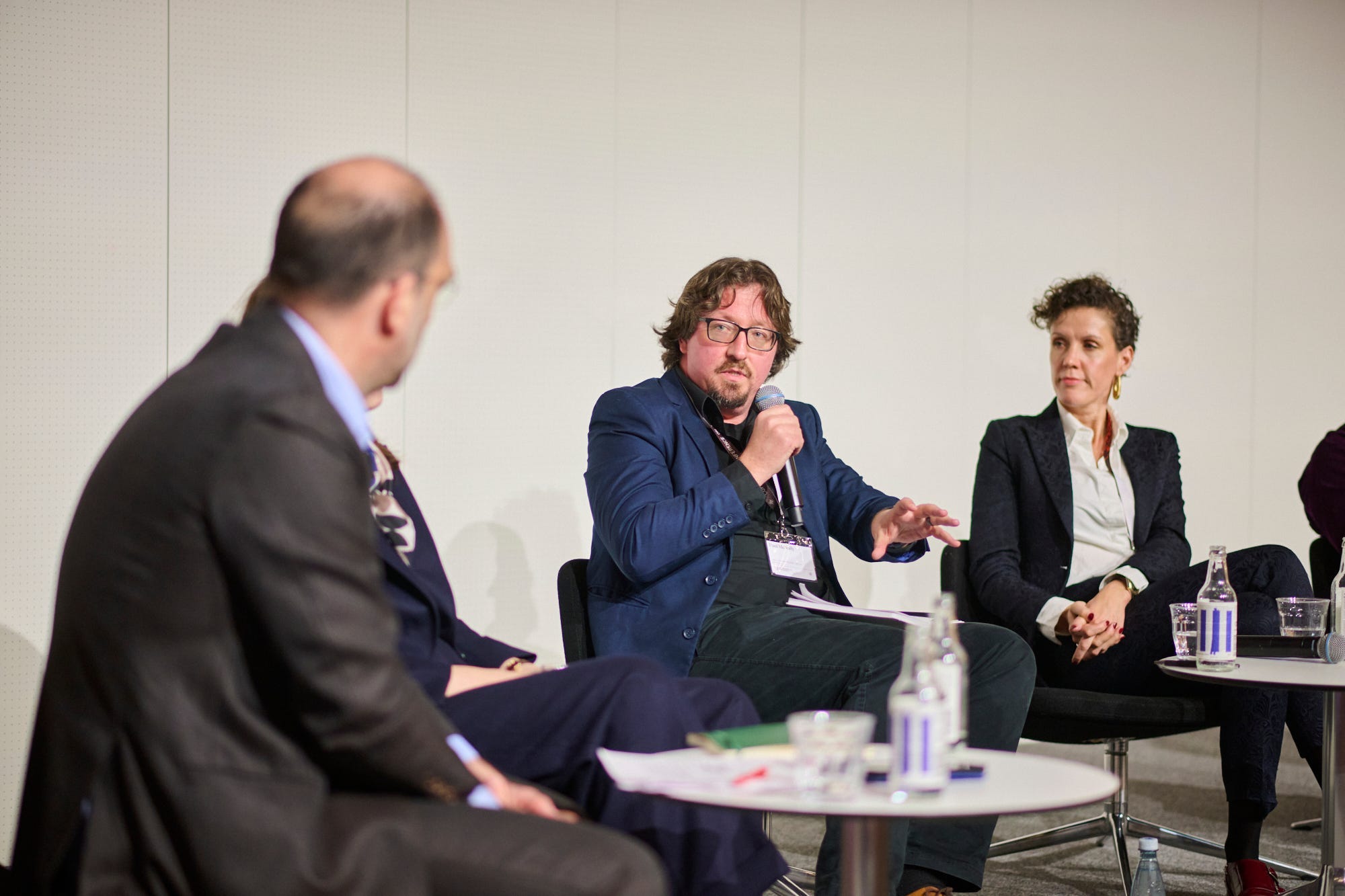
In November I was on a panel at the Copenhagen Conference on Information Integrity with a host of prestigious people, including Denmark’s Tech Ambassador, talking about AI and media. The need to fight disinformation and misinformation globally was at the top of our agendas.
AI lesson: AI detection tools (like GPTZero) don’t work. And if you rely on them exclusively to detect the presence of AI then they can do more harm than good. I wrote more about this here.
The Pacific Rim & ethics training
I have a cherished working relationship with The Public Media Alliance who do work with broadcasters around the world. And we organised a series of trainings for members of The Pacific Rim. We did extensive ethics training with a host of newsrooms.
I have developed an 8 step program on creating a bullet-proof AI ethics strategy. I presented this at The African Investigative Journalism Conference (AIJC) in November thanks to The Thomson Reuters Foundation. And to Agence Française de Développement earlier this year.
A huge thanks has to go to The Thomson Reuters Foundation, DW Akademie, International Media Support and Public Media Alliance for the incredible partnerships of this year. And I would like to thank the 100s of people that I have worked with around AI implementation. You have been inspiring. Here’s to 2026.
See you next year. Cheers.


Develop Al is an innovative consulting and training company that creates AI strategies for companies, newsrooms and individuals so they can implement AI effectively. We also build AI projects in the sectors of law, education and information integrity.
I implement AI strategies with IMS (International Media Support), Thomson Reuters Foundation, DW Akademie, Public Media Alliance, Agence Française de Développement and others to improve the impact of media globally.
Contact Develop AI to arrange AI training (online and in person) for you and your team. And ask about mentoring for your business or newsroom to implement AI responsibly and build AI products efficiently.
Email me directly on paul@developai.co.za, find me on LinkedIn or chat to me on our WhatsApp Community.